
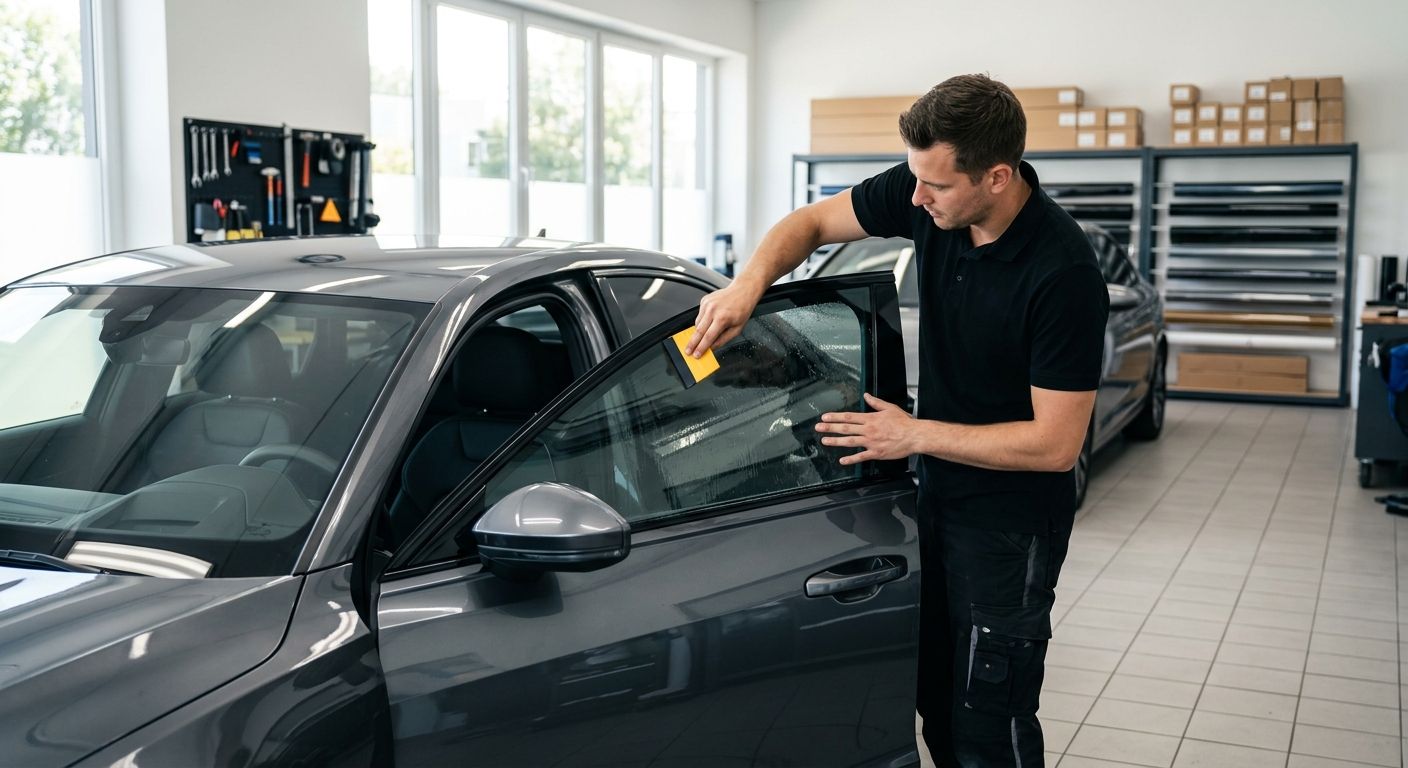
Ceramic window tint costs $450 on average for a full vehicle in 2026, with most jobs landing between $250 and $800 depending on vehicle size and film quality. That headline number rarely includes glass repair, removing old peeling tint, or the higher film grades used on curved rear windows — all of which push the final quote up.
- Ceramic window tint cost runs $250 to $800 per vehicle in 2026, averaging $450.
- SUVs and trucks cost more than sedans because they carry more glass surface.
- Home and commercial ceramic film is usually quoted per square foot, not per vehicle.
- Old tint removal and curved rear glass are the two hidden add-ons that raise a quote.
- Sunblockers Window Tinting in Hendersonville/Flat Rock, NC quotes ceramic film for cars, boats, tractors, homes and commercial buildings.
Why this matters
Ceramic film isn't priced the same as dyed or carbon tint, and quoting it by the roll instead of the vehicle leads to sticker shock at pickup. Ceramic film runs higher than standard tint because it blocks infrared heat without the metallic layer that interferes with radio and cell signals. If you're comparing quotes from different shops, you need to know which variables actually move the number before you sign off.
Sunblockers Window Tinting works on vehicles, boats, tractors, homes and commercial buildings across Hendersonville and Flat Rock, North Carolina, and pricing swings based on the same factors covered below.
How much does ceramic window tint cost in 2026?
The number depends almost entirely on how much glass you're covering and what grade of ceramic film goes on it. Here's how the categories break down:
| Vehicle/property type | Typical cost range (2026) | What drives the price |
|---|---|---|
| Sedan or coupe | $250-$450 | Fewer windows, flat glass |
| SUV or truck | $450-$800 | More glass, curved rear windows |
| Boat or tractor cab | Quoted per job | Custom glass shapes, no flat rate |
| Home windows | Priced per square foot | Number of panes, film grade |
| Commercial buildings | Priced per square foot | Total glass area, film specification |
Sedans and coupes sit at the bottom of the range because they typically have five to seven windows and mostly flat glass, which is faster to install and uses less film. SUVs and trucks climb toward $800 because rear hatches, third-row windows and curved back glass all add labor time and film waste.
Sedans and coupes: $250-$450
A compact sedan or two-door coupe is the cheapest vehicle type to tint because it has the least glass and the flattest surfaces. Shops spend less time trimming film around curves, so labor cost stays low. Buy if you're tinting a daily driver and want the lowest ceramic price point available in 2026.
SUVs and trucks: $450-$800
SUVs, crew-cab trucks and minivans push toward the top of the ceramic range because they carry more square footage of glass and often include a curved rear window that takes extra shaping. Buy if heat rejection matters more than cost — the extra glass is also where you get the most cooling benefit.
Home and commercial ceramic film: priced per square foot
Residential and commercial ceramic film jobs aren't quoted the same way as vehicles. Instead of a flat per-car rate, pricing is calculated per square foot of glass, since a two-window bathroom and a wall of commercial storefront glass have nothing in common cost-wise. Get a measurement-based quote rather than comparing a home job to a car job — the math doesn't translate.
Why ceramic window tint cost varies
A handful of factors explain most of the spread between a $250 quote and an $800 one:
- Film grade — entry-level ceramic film costs less than premium infrared-rejecting formulations.
- Number of windows — a two-door coupe has fewer panes than a four-door SUV.
- Curved glass — rear windshields and hatchbacks take longer to shape and install than flat side windows.
- Old tint removal — stripping peeling or bubbled tint before the new film goes on adds labor time.
- Vehicle, boat, tractor, or building type — marine glass, tractor cabs and commercial storefronts are quoted individually because glass shape and access vary so much.
- Local labor rates — installer pricing in western North Carolina reflects regional labor costs, which differ from national averages.
Get a ceramic tint quote
Vehicles, boats, tractors, homes and commercial buildings in Hendersonville/Flat Rock, NC.
Is ceramic tint more expensive than regular tint?
Ceramic tint costs more than dyed or standard tint because it uses a nano-ceramic particle layer that blocks infrared heat instead of a simple dye layer. The trade-off is better heat rejection and no signal interference with phones, GPS or toll transponders, which dyed film can't match.
Does ceramic tint cost more for SUVs than sedans?
Ceramic tint costs more for SUVs than sedans because SUVs carry more total glass and often include curved rear windows that take extra install time. A sedan lands closer to $250-$450 while an SUV or truck runs $450-$800 in 2026.
Is ceramic window tint worth the extra cost over dyed film?
Ceramic window tint is worth the extra cost for anyone who drives daily in direct sun, since it blocks significantly more infrared heat than dyed film without fading over time. Dyed tint is cheaper up front but tends to discolor within a few years, which usually means paying for a second install sooner.
FAQ
How much does ceramic window tint cost for a car in 2026?
Ceramic window tint costs $250 to $800 for a full vehicle in 2026, averaging around $450. Sedans sit at the low end and SUVs or trucks sit at the high end because of extra glass and curved rear windows.
Is ceramic tint more expensive than regular tint?
Yes, ceramic tint costs more than dyed or standard tint because it uses a nano-ceramic layer to block infrared heat instead of a basic dye layer. It also avoids the signal interference issues that come with metallic or dyed film.
Does ceramic tint cost more for SUVs than sedans?
SUVs and trucks cost more to tint than sedans, typically $450 to $800 versus $250 to $450, because they have more total glass and curved rear windows that take extra labor.
How much does ceramic film cost for home windows?
Home ceramic film is priced per square foot rather than as a flat vehicle-style rate, since the total glass area varies so much between properties. Get a measurement-based quote for an accurate number.
Is ceramic window tint worth the extra cost?
Ceramic window tint is worth the extra cost for daily drivers because it blocks more heat and holds its color longer than dyed film, which tends to fade or purple within a few years.
Does the cost include removing old tint?
Old tint removal is often a separate line item because peeling or bubbled film adds labor time before the new ceramic layer goes on. Ask upfront whether a quote includes strip-and-remove work.
Can boats and tractors get ceramic tint?
Boats and tractor cabs can be fitted with ceramic film, but pricing is quoted per job instead of a flat rate because glass shapes and access points vary widely between machines.
Do commercial buildings get the same ceramic film as cars?
Commercial buildings use ceramic film rated for larger glass panels and are priced per square foot, not per vehicle. The film specification differs from automotive-grade ceramic in thickness and heat-rejection rating.
One last thing
The single biggest cost swing isn't film grade — it's whether old tint needs to come off first. A clean install onto factory glass costs less than a job that starts with scraping bubbled film off a rear windshield, so ask about tint removal before comparing two quotes side by side. Sunblockers Window Tinting handles that removal step as part of the same appointment for vehicles, boats, tractors, homes and commercial buildings across Hendersonville and Flat Rock, North Carolina.